Archive
Newsletter Archive
January 6, 2024
Happy New Year
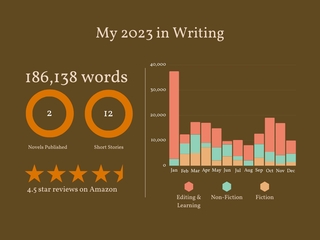
I'm not making any resolutions. I'm not opposed to the idea, or anything - I'm constantly looking for ways to improve my habits, behaviour or understanding. I just think that pinning some desire to make yourself better to any arbitrary date is setting yourself up for failure. Deadlines are great: finish the book by such-and-such a date is a fantastic way to motivate yourself. But saying 'from now on I will be...' isn't that. Anyone who's done any sort of workplace training will be familiar with the idea of SMART goal setting. Specific, Measurable, Achievable, Relevant, Time-Limited. New Year's Resolutions are often just Specific at best, and frequently not even that. How many times have you heard (or said) something like 'I'll get in shape this year?' So for my writing, I'm sticking with my tried-and-true workflow. Write 200 words every day. It's Specific, nice and clear. Measurable, since I can count words. Achievable (on a good day it can take 10 minutes; on a bad day... well it's still easier than 1,000). Relevant, obviously. And Time-Limited, since I have 24 hours to do it. And it works. For me, anyway - we're all different, after all. Some people prefer to do sprints of hundreds or thousands of words and then recover. Some write for half the year and then do other things with the rest of their time. For me, I do a little but often. It keeps the story fresh in my mind, sets up a streak I don't want to break, and means that every day I can honestly say "I am a writer, I wrote this morning." I can hear the objections now, 200 words a day isn't enough to get anywhere. The trick is I don't have to stop at 200 if I don't want to. And usually I don't. This is my year's breakdown - aiming for 200 a day I actually reached over 500 on average, and 186,000 total!
My 2003 in writing - 186,138 words, 2 novels, 12 short stories, 4.5 star reviews on Amazon. Also a graph of output per month.
I should add 26 newsletters to that graph too... That's the majority of the non-fiction you see there. Thanks for being here.
I'd love to know: how do you build your good habits, or break your bad ones? Do you believe in the power of resolutions?
(Incidentally, the word 'sprints' in the sixth paragraph above is the 200th word in this introduction. That's how little I am committing to. This whole intro is 400, including this sentence.)
Space News
Our best view of Io so far
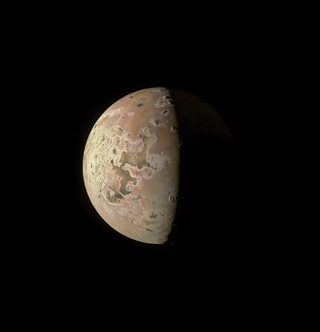
Juno image of Jupiter's volcanic moon Io.
On December 30th, NASA's Juno space probe will have taken the closest pass to Jupiter's moon Io for almost two decades - a mere 1,500 kilometres! While the imagery from that super-close visit will take a while to be processed and analysed, NASA has released the best quality images seen to date. The one heading this section is gorgeous, and was taken on October 15th 2023. You can see the scale of some of the volcanoes, not to mention the sulphur coating much of the surface. I've been fascinated by Io, and the Jovian system in general, ever since the movie 2001: A Space Odyssey. (To be honest, I read the book first, but they visited Saturn in that. The sequels aligned with the movie to centre the action on Jupiter.)
It's not all about the pretty pictures though, the other instruments aboard Juno are doing some serious science too. From this year it'll be doing some checks on Jupiter's upper atmosphere, in between additional flybys of Io.
Source: missionjuno.swri.edu
Other Books To Check Out
I've gathered a few great books from independent authors like me, I hope you'll check them out.
And let me know if you have any books to recommend! I'm particularly interested in indie authors, but anything you've read and loved would be awesome.
Get it now!
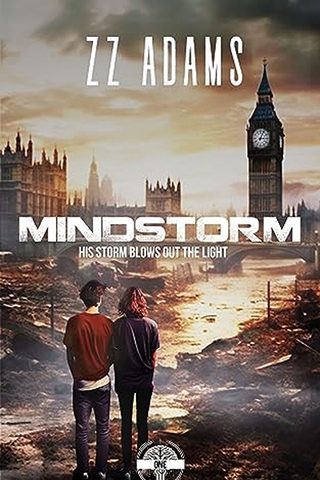
Fight for your friends, your family, your future.
It's the near future and severe poverty is the new normal for the majority of humanity. The world is suffering from climate change and the future seems bleak. In the UK, children with incredible psychic abilities begin to appear.
For Oscar Hyde, life has never been harder. Everyone he knows is moving out of the city. Even his family are considering going. When Oscar discovers he has the power to be ignored, he succumbs to temptation and starts stealing. As his opportunistic tendencies take over, he becomes addicted to the adrenaline-fuelled thefts. He has the power to be ignored, so why not use it?
But when agents from a secret organization come to kidnap him, he's saved by a scrappy group of teenagers with psychic powers of their own. In the Core, an underground lair in the heart of London, they are watched over by Athena, a shadowy figure with an agenda as mysterious as she is. But they will need more than the considerable resources of Athena and the Core to fight off the organization that is gathering against them. Can they learn to tap into their powers and pull together, or will they fall victim to the secrets of their past?
Buy now!
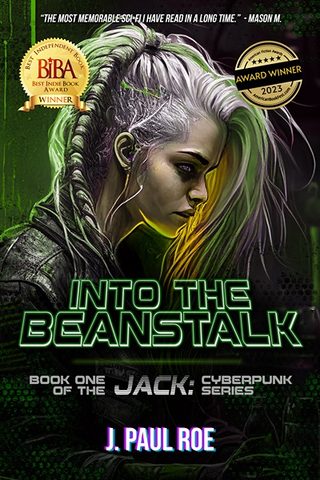
A corrupt megacity. A broken world. A girl who can no longer afford to hide from her past.
Jack is a techie and long-time shut-in, driven to save her father from corporate servitude. That means getting her hands on scrip, and lots of it. Going into debt with the most violent bikers in Hope Megacity will get her the cybernetic limbs she needs to overcome her disabilities, but that's only the beginning.
A vicious betrayal, a lethal cyberattack, and some broken neural hardware has Jack seeing things -- namely a huge column of light climbing all the way to the Global Corporations' city in the clouds. She'll need to join up with the city's most notorious hacker to find out what the elite are hiding from the millions of people living under their feet.
Strange News
The crippling of a British Institution
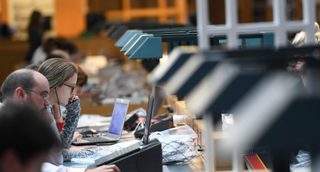
Britain is full of museums, documenting all manner of our history, and that of the world beyond. These days there are a number of calls for looted and stolen relics to be returned, of course, and those institutions are navigating a complex path of acknowledging the mis-deeds of a colonial past and preserving access to illuminating and rare artefacts for researchers. The British Library, like many others, is a sort of museum too. They have original manuscripts, rare items, invaluable relics. It's a lot easier with books. Putting a book in a library makes it more available to the public, and doesn't deprive anyone of it. The value of a book is in the contents, and millions of copies are printed every year. And that's not even considering eBooks, which have no physical manifestation.
The British Library is also a 'Legal Deposit Library' - by law, they are entitled to a copy of every single book ever published. I've received letters informing me of this obligation whenever I publish one of mine, and have to send a physical copy to them for their collection. So if there's any book you know has been published, but cannot find, it'll be in their vaults somewhere.
And up until halloween 2023, anyone could go and ask for it.
That's the day the library fell victim to a cyberattack which crippled all their digital systems. All those books are safe, but as far as a reader might be able to tell, they don't exist. The days of card stacks and drawers of indexes are long gone, and the only way to request a book (or even to find one in the miles of shelving distributed around the UK) is by computer. Even their website was down for weeks, and is back up only as a temporary placeholder.
The linked article goes into detail on how this happened, and what the library are doing about it. It's wonderfully evocative, written by Carolyn Dever, a researcher who has used the library regularly over the years.
Source: publicbooks.org
Miscellany
Real life Q - inside the place that builds the UK's spy gadgets.
Source: BBC News
One man's mission to record all of British Folklore.
Source: The Guardian
Communication with whales, and how it might lead to SETI insights.
Source: vetmed.ucdavis.edu
And Finally
I know lots of writers who swear by writing longhand, with pen and paper. Most of them do it for a first draft, and claim it gives them a tighter connection between their brains and the words on the page. I've been using computers for so long now that my handwriting is appalling. If I tried writing longhand I'd probably never be able to figure out what I wrote even a few days later. So I type everything - first drafts, editing notes, outlines, 'sketches' of scenes. Even my to-do list is computerised. And yet, I never really learned to type 'properly'. When I started, it was the classic two-finger hunt-and-peck approach, and I have since graduated to using most of my fingers. Nowadays I can type fairly rapidly, and without looking down more than every few sentences. I'm a long way from touch-typing though, and I end up with a lot of typos. The effect is that I'm moving my hands around a great deal more than is ideal. Luckily I've avoided any injury or pain as a result, and I do get away from the computer a lot more than I used to, which helps. But I think I can do better. So since this seems to be the 'habits' newsletter now, I'm curious if any of you have ever learned to touch-type. How did you do it, and more importantly, how did you resist going back to the old methods? I've seen some good reports on this site, https://www.keybr.com/ so I might give that a go...
Source: keybr.com